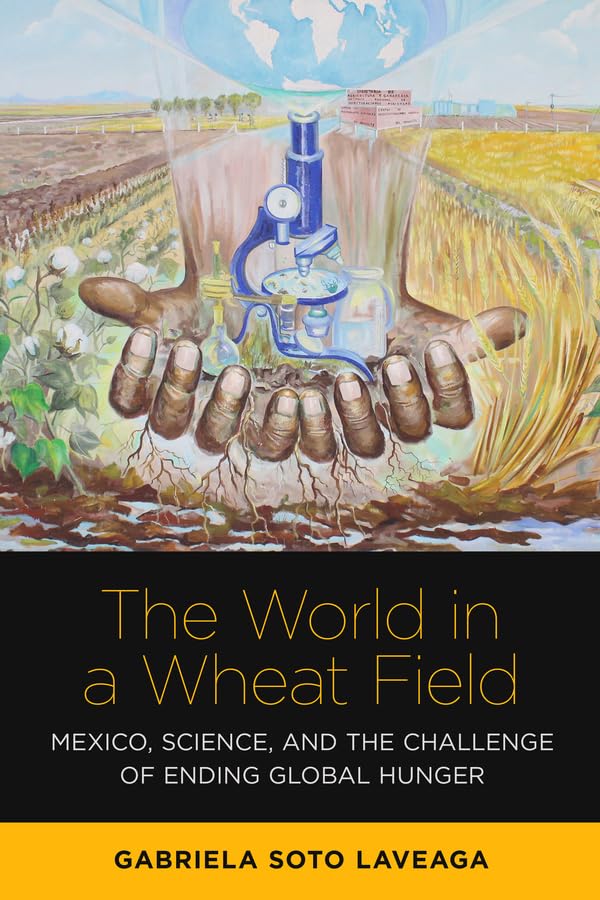
The World in a Wheat Field
Mexico, Science, and the Challenge of Ending Global Hunger
In the mid twentieth century, researchers at an experiment station in Sonora’s Yaqui Valley designed high yielding wheat seeds with the promise that increasing crop productivity would end world hunger.
The story usually gets told as a triumph of foreign expertise. Soto Laveaga tells it from the ground it happened on. Drawing on archives in Mexico and India, she puts native lands, Sonoran farmers, and Mexican innovation at the center of the Green Revolution, and follows the seeds and the science along the circuit that connected Mexico to the Punjab.
The result is an account of how a global initiative remade one particular place, and an argument about why so many development projects that promised to eradicate hunger did not.
Praise
“Deeply researched, critical but compassionate, and beautifully written, The World in a Wheat Field will undoubtedly become a touchstone reference in the histories of science, agriculture, and international development.”
“Gabriela Soto Laveaga dispels the fables technocrats tell and offers us an intimate, human story of development and resistance reaching from Mexico to the Punjab. The reader is witness to the Green Revolution, its hope and violence.”
“Gabriela Soto Laveaga brings newly discovered and fascinating Mexican materials to the Green Revolution story, making this book essential reading for everyone interested in the complexities of international agriculture.”
“The World in a Wheat Field is a meticulous and fascinating dive into the conditions that allowed the Green Revolution to emerge from Mexico. Taking on a history that has long been dominated by heroic scientific tales and simplistic critiques, Soto Laveaga offers us a complex portrait of the revolutionary wheat program that is both profoundly local and global.”